
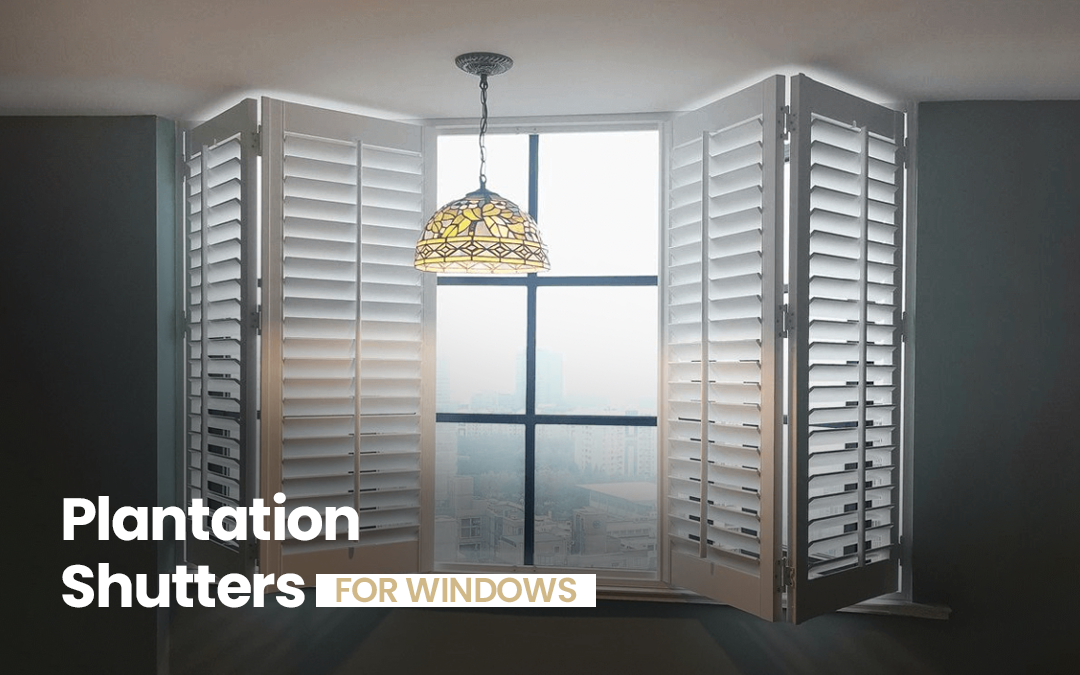
What Actually are the Plantation Shutters?
Plantation shutters are a type of window covering with wide, horizontal slats. They are mounted inside a frame, allowing the slats to be tilted open or closed. These shutters are popular for their classic look, which suits various home styles, and their practicality in controlling light, privacy, and airflow. Made from materials like wood or vinyl, plantation shutters are both stylish and functional, adding a touch of elegance to any room.
Understand how Plantation Shutters for Windows work
Plantation shutters work by using adjustable slats, also known as louvers, that can be tilted to control the amount of light, airflow, and privacy in a room. Here’s how they work:
1. Frame and Mounting:
The shutters are mounted on the inside of a window frame, fitting snugly into the window opening. They can be hinged to open outward like doors or remain fixed with just the louvers moving.
2. Tilt Rod:
A central tilt rod connects all the louvers. By moving this rod up or down, you can adjust the angle of the louvers. Tilting them open allows more light and air into the room, while tilting them closed provides privacy and blocks out light.
3. Louvers:
The louvers are the horizontal slats that make up the main body of the shutter. These can be angled at different degrees depending on your needs, making it easy to manage the room’s environment.
4. Opening and Closing:
In addition to adjusting the louvers, the entire shutter panel can be opened or closed by swinging it on its hinges, similar to a door. This allows for full access to the window.
Overall, plantation shutters are versatile, easy to use, and offer great control over your home’s ambiance.
Does the Plantation Shutters for Windows block out light?
Plantation shutters can block out light, but the level of light blocking depends on how you adjust the louvers. When the louvers are fully closed, they create a solid barrier that blocks most of the light from entering the room. However, there might still be small gaps between the louvers and around the edges of the shutters, which can allow a little light to seep through.
For a near-complete light block, you can close the louvers tightly. But if you prefer some natural light, you can tilt the louvers partially open. This flexibility makes plantation shutters a great choice for controlling the light in your room.
Know the price of Plantation Shutters in Perth, Australia?
The price of plantation shutters in Perth, Australia, can vary depending on the material, size, and custom features you choose. On average, you can expect to pay between AUD 300 to AUD 600 per square meter for high-quality shutters. Factors such as the type of material—whether wood, PVC, or composite—will affect the price, with wood generally being more expensive. Customization options, like special colors or motorized controls, can also increase the cost. It’s a good idea to get a few quotes from local suppliers to find the best deal for your needs.
What is the difference between Plantation Shutters and Plantation Blinds for Windows?
| Feature | Plantation Shutters | Plantation Blinds |
|---|---|---|
| Material | Typically wood or faux wood | Typically wood or faux wood |
| Construction | Solid panels with adjustable louvers | Individual slats connected by cords |
| Installation | Often mounted inside the window frame | Often mounted outside the window frame |
| Flexibility | Less flexible (adjusting louvers) | More flexible (raising, lowering, tilting slats) |
| Durability | Generally more durable | Less durable |
| Energy Efficiency | Generally more energy-efficient | Less energy-efficient |
| Style | Classic and traditional | Versatile and modern |
Which Plantation Shutters are the best for your Home in Perth?
Choosing the best plantation shutters for your Perth home depends on your personal preferences, budget, and the specific needs of your space. Here are some popular types of plantation shutters to consider:
1. Timber Plantation Shutters
- Pros: Classic, elegant, and durable. Can add warmth and character to your home.
- Cons: Can be more expensive than other materials and may require more maintenance.
2. PVC Plantation Shutters
- Pros: Affordable, durable, and resistant to moisture and insects. Easy to clean and maintain.
- Cons: May not have the same natural look and feel as timber shutters.
3. Aluminium Plantation Shutters
- Pros: Lightweight, durable, and resistant to corrosion. Ideal for outdoor areas or high-humidity environments.
- Cons: Can be more expensive than PVC shutters and may not have the same warmth as timber shutters.
4. Hybrid Plantation Shutters
- Pros: Combines the durability of PVC with the aesthetic appeal of timber. Often more affordable than solid timber shutters.
- Cons: May not have the same natural look and feel as solid timber shutters.
5. Custom Plantation Shutters
- Pros: Can be tailored to fit any window shape or size, and can be customized with various finishes and hardware options.
- Cons: May be more expensive than standard shutters and may require a longer lead time.
When choosing plantation shutters, consider the following factors:
- Your budget: Determine how much you’re willing to spend on window treatments.
- Your style: Choose a style that complements the overall aesthetic of your home.
- Your needs: Consider factors such as privacy, light control, and energy efficiency.
- Maintenance: Think about how much time and effort you’re willing to spend on maintenance.
Conclusion
In conclusion, plantation shutters are a versatile and stylish window treatment option that can enhance the beauty and functionality of your Perth home. Whether you’re looking for classic timber, budget-friendly PVC, or durable aluminum, there’s a shutter type to suit every need and preference at Elain Blinds. By understanding how these shutters work, their light-blocking capabilities, and the costs involved, you can make an informed decision that aligns with your budget and style. With the right choice, plantation shutters can add lasting value and comfort to your living space, making them a wise investment for any homeowner.